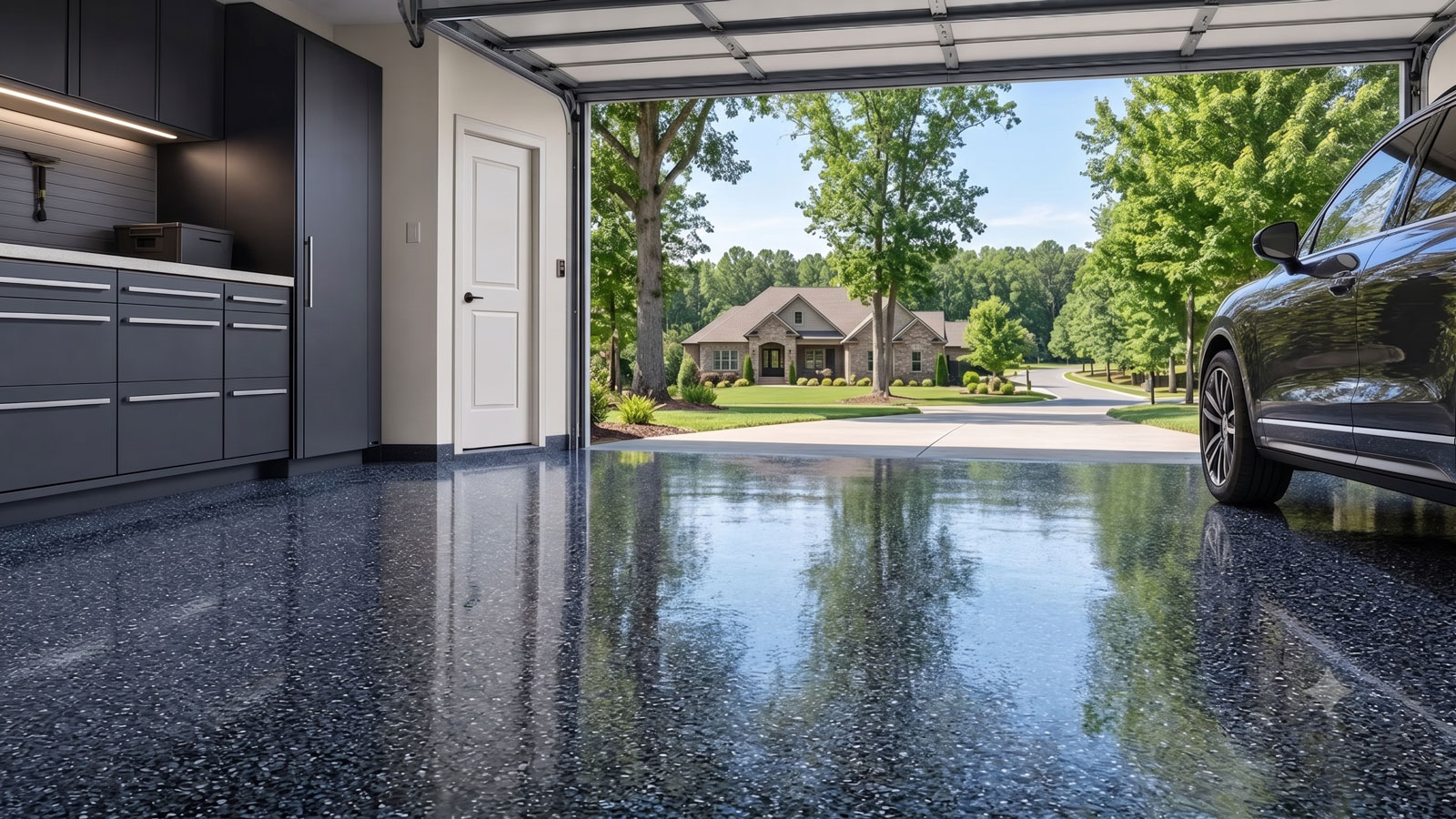
Garage Floor Coating in Bellevue, WI
Floor Coating Services in Bellevue, WI
Bellevue is a separate incorporated village east of Green Bay with a recently updated development framework. Its Village Board adopted the 2023–2043 Comprehensive Plan on January 11, 2023, following community engagement during 2022. That plan calls for diversifying housing, increasing residential density, creating a village square and using a gridded street network to manage future traffic. It also recommends low-impact development practices and preparing redevelopment plans. Those ambitions distinguish Bellevue's housing context from the older riverfront streets of Green Bay, but they cannot establish when a given garage slab was placed.
Bellevue's plan makes stormwater an explicit subject, providing a stormwater system map, surface-water map, FEMA floodplain map, wetlands map and future-land-use map. Public maps are useful for understanding the region's drainage obligations, but none measures moisture in a private garage. A homeowner should inspect whether gutter outlets or a low driveway carry water through the garage door, and assess persistent concrete dampness independently.
Summer and winter garage use differ significantly in northeastern Wisconsin. WisDOT's deicing practices make tracked-in grit, slush and salt plausible, while a newly built garage may still contain curing products or sealer. A properly profiled epoxy, polyaspartic or flake system may make cleaning easier on sound concrete, but cannot correct outside runoff or movement. The quote should identify surface removal, cracks, texture and correct curing.
Local Market Insight
Bellevue adopted its 2023–2043 comprehensive plan January 11, 2023. It explicitly calls for housing diversification and low-impact development and includes separate stormwater, surface-water, floodplain and wetland maps. These are public planning facts, not moisture measurements of private concrete.
What Affects the Cost of Garage Floor Coating in Bellevue?
Bellevue's mixture of established neighborhoods, redevelopment areas and planned growth can yield both old painted concrete and new floors with construction treatments. Project cost should follow actual surface condition and the garage's working layout.
The village's mapped stormwater network does not reveal driveway runoff at a particular address. An installer should distinguish grading issues from old-coating removal, grinding, repairs and the full finish system.
- Housing and redevelopment phases: Bellevue's 2023 plan encourages new residential forms and redevelopment. Garage slabs may be original, replacement pours or later additions; identify actual history before pricing repairs.
- Stormwater network versus threshold: The village publishes stormwater and FEMA floodplain maps, but these do not diagnose wet concrete. Check gutter discharge, driveway pitch and observed water entry separately.
- Old paint and builder treatment: An established garage may contain paint and oil; a new slab may have sealer or curing products. Mechanical removal and profiling must suit the specified resin system.
- Cracks and changed floor use: Joints, patching, deterioration or hobby equipment can affect repair scope. Continuing structural movement calls for more than decorative resin.
- Winter deicing deposits: Wisconsin highway brine and salt may be carried inside on tires. Proper preparation and ongoing cleaning matter; a coating does not prevent residue from arriving.
- Texture and cure conditions: Select a sample that balances winter grip and sweeping, and require all layer specifications, temperature limits and traffic-return time.
Call for a clear, project-specific estimate — or request one online.
Bellevue's 2023–2043 Growth Plan and Garage Slab Readiness
Bellevue adopted a new comprehensive plan on January 11, 2023 after planning work and community feedback in 2022. The village's stated priorities include a new village square, more varied housing types, higher residential density, linked parks, a gridded road system and low-impact development. The plan's mapping also distinguishes existing uses from five-year growth increments. These facts document an active development pattern and are not a guarantee that any garage floor has new or original concrete.
A homeowner moving between established and newly developed Bellevue properties may encounter different preparation challenges. Old paint, automotive deposits, cracks and later patchwork can affect an older floor; newer concrete can still carry bonding-inhibiting sealer. The date of a subdivision or housing plan cannot establish the floor's actual pour or curing history.
Grinding should remove incompatible material and create a profile suited to epoxy or polyaspartic. Any serious movement or ongoing moisture issue needs assessment rather than being hidden beneath flakes. A strong topcoat depends on an appropriate substrate.
Written bids should state surface inspection, stripping, preparation, cracks, edges and full layers with temperature and parking-return conditions. That is more informative than charging from the neighborhood's apparent age or development designation.
Bellevue's Stormwater Maps and Real Winter Water Inside Garages
The village's Comprehensive Plan 2023–2043 includes mapped sanitary sewer and stormwater management, surface water, FEMA floodplains and wetlands. These map layers are useful for public infrastructure and land-use decisions. They do not show whether a specific overhead-door apron sends water inside or whether a slab can accept a resin coating.
After rain, observe gutter outlets and the driveway slope. During snow season, determine whether water appears only when cars return carrying slush, or whether it crosses the door even without vehicles. Persistent dampness in bare concrete is another issue that may require product-specific assessment.
Wisconsin DOT describes salt-brine and pre-wetted salt use for winter roads, so vehicle residue can be a real cleaning concern. An appropriate continuous surface on sound concrete may make this easier to remove but cannot change the driveway grade or act as floodproofing. A coating also cannot stabilize moving cracks.
Ask for actual finish textures suited to wet shoes and household storage, and make sure the installer specifies how long the full system must cure before the garage is returned to parking use.
Frequently Asked Questions
Does Bellevue's stormwater map tell me whether my garage is dry?
No. It describes public infrastructure. Inspect the driveway threshold, gutters and actual concrete moisture before deciding whether additional work is needed.
Are garages in Bellevue's newer neighborhoods immediately coating-ready?
Not necessarily. Curing agents and sealer may need removal, and product-specific profiling and moisture limits still apply.
Can a coating stop rain flowing through a low garage door?
No. Exterior drainage and grading are separate from decorative resin flooring. Address recurring water entry first.
How does winter salt influence a Bellevue floor finish?
Wisconsin road crews use brine and deicing salt. A sound coated floor can simplify cleaning, but grit and residue still require regular removal.
What should a Bellevue estimate detail?
Request old-layer stripping, mechanical grinding, repairs, moisture checks if indicated, all finish layers, edge details, texture and the cure schedule.
Bellevue Neighborhoods & Local Context
Phone Quote Line
Speak with a local floor coating specialist about your project and get a realistic estimate range.
(920) 990-2224Typical Project Cost
$3,000–$5,500
Typical range for a standard two-car garage. Final pricing depends on floor size, concrete condition, prep work, coating type, and finish options.
Helpful Guides
Other Service Areas