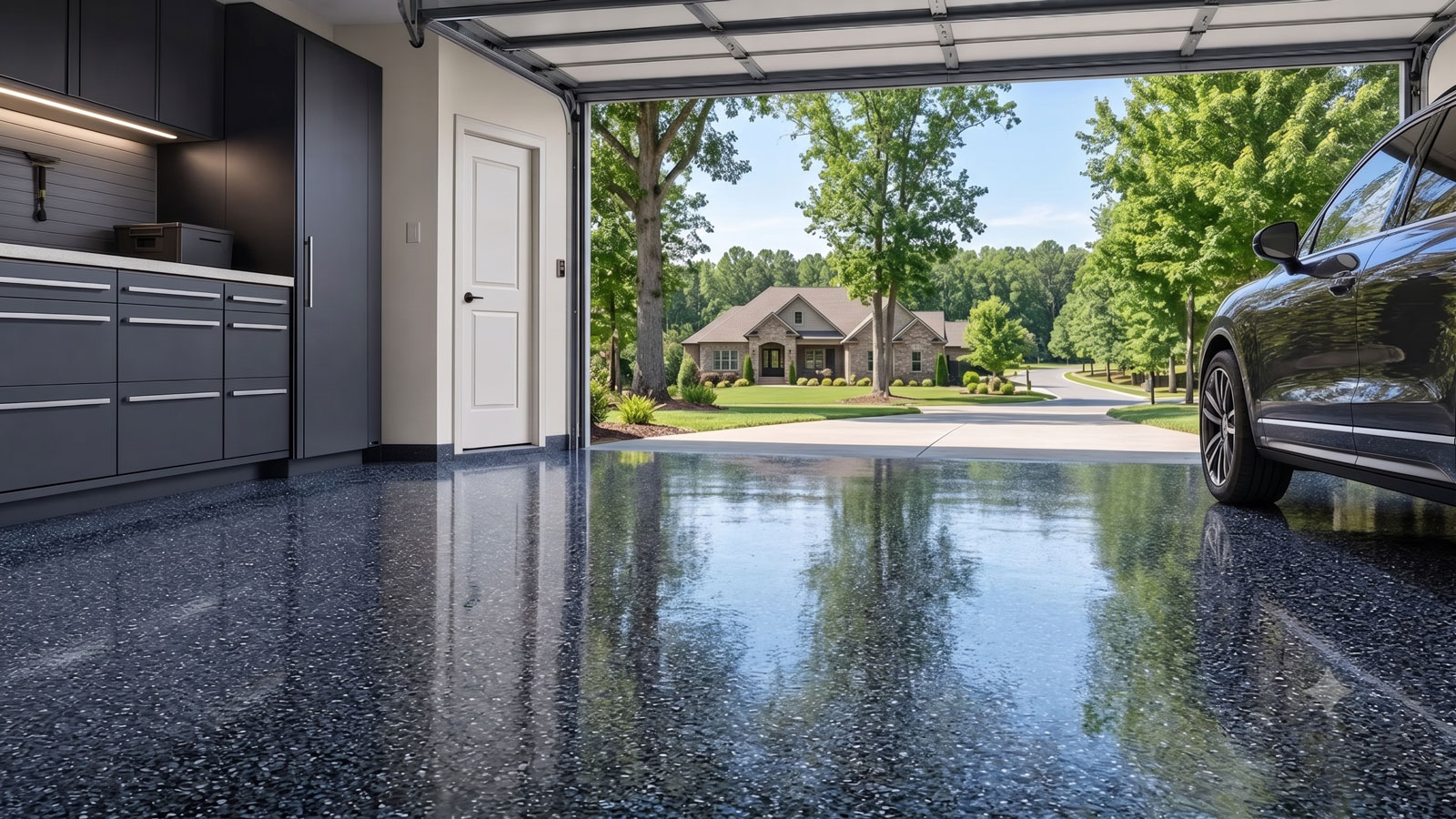
Garage Floor Coating in Howard, WI
Floor Coating Services in Howard, WI
Howard is an incorporated Brown County village with its own 2042 Comprehensive Plan, adopted November 12, 2022, not simply an outer Green Bay neighborhood. Its planning maps distinguish village limits, an extraterritorial planning area, the Oneida Nation boundary and neighboring Suamico, Hobart and Green Bay. Those jurisdictional boundaries matter for development and road services, but do not establish how old the concrete in a resident's garage is. An established house may have a later garage or repoured floor; newer residential concrete may still carry curing agents or sealer.
The village's position between developing neighborhoods and watercourses creates a separate drainage question. Its 2042 plan contains land-use, environmental and infrastructure chapters to guide development rather than diagnose individual buildings. A map indicating wetlands or a public drainage corridor cannot prove that a garage has moisture problems. Inspect the actual driveway slope, roof-water discharge, past water marks and any areas staying damp after dry weather.
Howard's winters also expose garages to salt, brine, slush and grit carried in by cars. Wisconsin DOT documents state highway anti-icing with salt solution and pre-wetted materials, especially when conditions shift around freezing. On sound, properly ground concrete, epoxy, polyaspartic or decorative flakes may simplify normal cleanup. They cannot change a driveway grade or stabilize structural movement. An accurate bid should describe paint removal, cracks, texture and product cure conditions.
Local Market Insight
Howard adopted its 2042 Comprehensive Plan on November 12, 2022. Its maps separate village, extraterritorial and Oneida Nation boundaries, while state road-maintenance records document brine and salt use. Those facts highlight varied building context and winter cleaning, not private concrete defects.
What Affects the Cost of Garage Floor Coating in Howard?
Howard's established and newer residential areas can have very different surface treatments. A freshly built garage may require removal of curing products; an older workspace can retain paint, oils and previous repairs.
An estimate should specify actual grinding, crack work and floor clearance. Public land-use or watershed maps cannot replace an observation of water entering at a private garage.
- Different residential development periods: The village's 2042 plan maps varied housing and growth areas. Ask whether the garage was added or its floor repoured rather than using a subdivision's age to determine surface preparation.
- Previous paint and sealer: Oil, paint, resin and builder sealers can reduce adhesion. Include mechanical removal and suitable surface profiling instead of treating a clean-looking floor as coating-ready.
- Wetlands and driveway runoff: Howard planning addresses public natural resources, not a property's moisture test. Check driveway and gutters for actual inflow and inspect persistent damp concrete as a distinct issue.
- Winter salt residue: WisDOT uses salt and liquid brine. Existing grit and deposits should be addressed in the preparation plan, and owners will still need routine winter cleaning afterward.
- Cracks and joint details: Pitting, repairs, edges and transitions influence preparation. A crack with continuing movement is not made structurally stable by a decorative coating.
- Finish and household downtime: Compare physical texture samples for snow-covered footwear and dust cleanup, full layer chemistry, acceptable floor temperatures and vehicle-return conditions.
Call for a clear, project-specific estimate — or request one online.
Howard's 2042 Plan, Boundaries and Garage Histories
Howard's 2042 Comprehensive Plan was adopted November 12, 2022. The U.S. Census Bureau separately records 17,399 residents in 2010 and a July 2025 estimate of 22,233, with the 2025 series reporting 11.4-percent growth since its April 2020 estimates base. The plan's maps locate the village beside Suamico, Hobart and Green Bay and distinguish the Oneida Nation Tribal Boundary and extraterritorial planning area. These give five meaningful civic and demographic anchors for real development change, not a concrete survey. Those distinctions matter for jurisdictional planning and building growth, but none permits a coating installer to assign a concrete condition from a mailing address.
Different building periods can produce a garage with original bare concrete, a replacement pour or several layers of paint. New concrete may contain curing sealer that inhibits resin adhesion. Homeowners should inspect the slab after moving shelving and cars, noting cracks, repairs and oil deposits rather than assuming the house and floor share a construction date.
Professional grinding should create the required surface profile and remove films that will not bond. Patches and stable cracks may be repairable, while continuing movement and unexplained moisture need separate assessment. A premium topcoat does not rescue a weak slab.
Written estimates should identify old-layer removal, grinding, crack treatment, edge work, all base and topcoat layers, texture and return-to-parking timing. The goal is to price the actual work, not the broad age of a Howard subdivision.
Howard Winter Road Treatments and Site-Specific Water Entry
Wisconsin DOT states that county highway departments manage state-highway winter maintenance, using salt, pre-wetted mixtures and liquid brine to keep snow and ice from bonding to road surfaces. The village's 2042 planning framework separately addresses natural resources, utilities and public infrastructure. Those facts make winter residue and stormwater sensible topics for homeowners, but do not establish contamination or moisture within any one garage.
Ask where water appears: salt-laden slush from a returning vehicle, runoff coming down the driveway, a gutter that empties beside the wall, or dark concrete that stays wet during dry weather. These are different conditions with different remedies. Public wetland and street maps cannot substitute for a floor and threshold inspection.
On an appropriately prepared continuous surface, ordinary meltwater and road grit may be easier to remove than from uncoated porous concrete. However, winter cleaning remains necessary. Epoxy does not grade a driveway, stop flooding or immobilize structural cracks.
Discuss grip and sweepability for boots, vehicle tires and household storage. Because installation conditions must stay within the system's temperature and moisture limits, the contractor should specify preparation, cure and a realistic period before the garage returns to service.
Frequently Asked Questions
Does Howard's 2042 plan show the condition of my garage slab?
No. The plan describes growth, infrastructure and jurisdictional boundaries. Determine actual concrete age, previous paint and repair needs from inspection.
Will winter road salt damage every unfinished garage floor?
Not necessarily. WisDOT's salt and brine use makes exposure plausible, but the particular concrete must be evaluated for deposits or damage before recommending extra work.
Can epoxy stop water entering through a Howard driveway?
No. Rain or meltwater crossing a threshold may need separate drainage or grading work. A decorative floor finish cannot prevent outside water entry.
Is polyaspartic required for cold Wisconsin winters?
No. Preparation, permitted installation temperature, product curing conditions and cleaning needs matter more than choosing solely by chemistry category.
What should a Howard coating quote include?
Ask for prior-coating removal, grinding, crack and edge treatment, moisture checks when warranted, complete layers, texture and safe parking-return instructions.
Howard Neighborhoods & Local Context
Phone Quote Line
Speak with a local floor coating specialist about your project and get a realistic estimate range.
(920) 990-2224Typical Project Cost
$3,000–$5,500
Typical range for a standard two-car garage. Final pricing depends on floor size, concrete condition, prep work, coating type, and finish options.
Helpful Guides
Other Service Areas