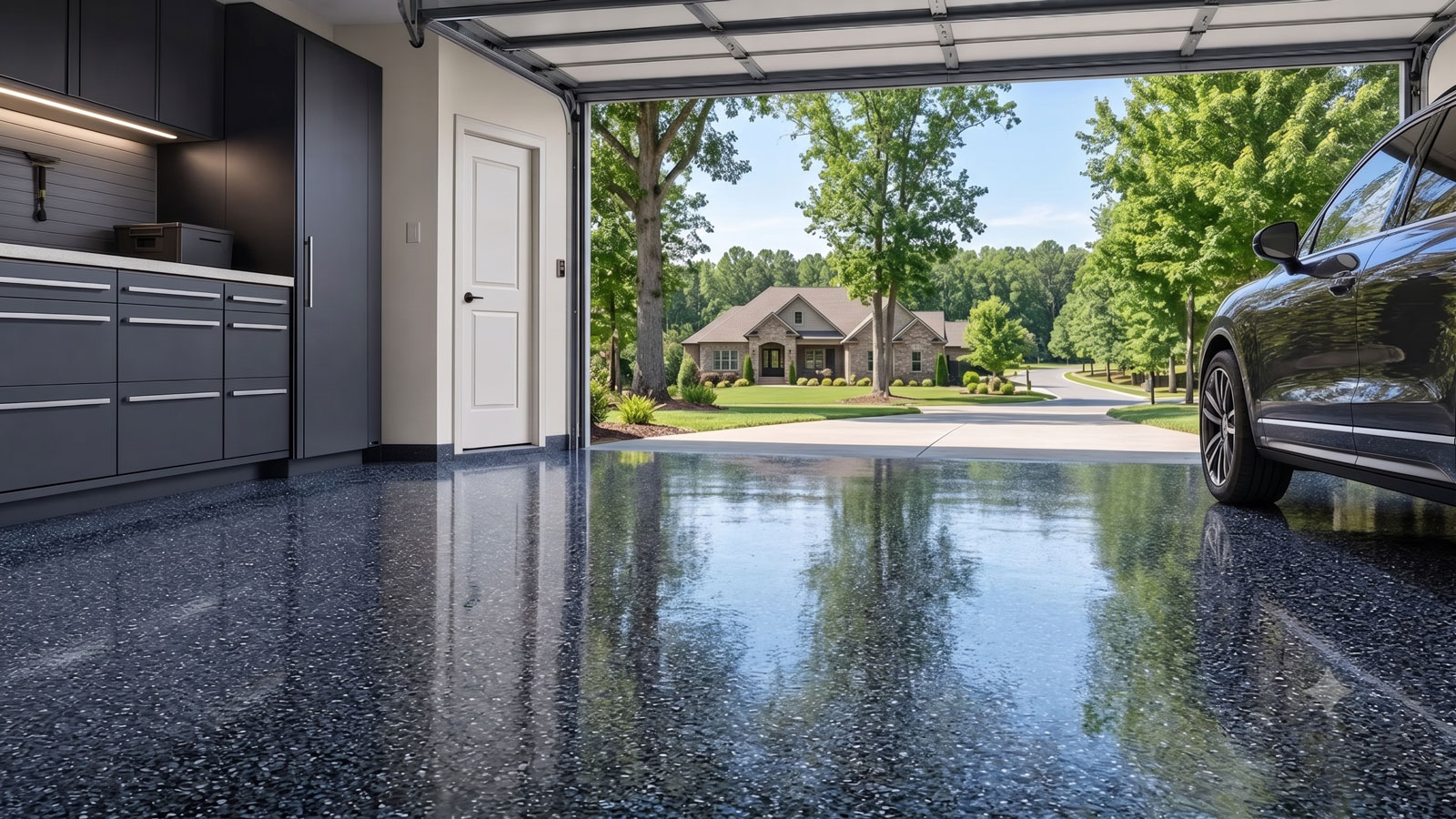
Garage Floor Coating in De Pere, WI
Floor Coating Services in De Pere, WI
De Pere is a separate incorporated city on both banks of the Fox River, rather than simply a Green Bay neighborhood. Its municipal plan describes two downtown districts, St. Norbert College on the west bank, industrial and business parks, and residential expansion outside the older core. The city's history dates the Fox River dam to 1849, the bridge between the riverbanks to 1851 and the consolidation of East and West De Pere to 1890. Those facts point to many eras of buildings and later garage construction; they do not tell anyone how old a private garage slab is.
De Pere's Downtown Master Plan also recognized differing residential demand and the influence of bridges and river access on redevelopment. A downtown building may have a garage added or repoured long after its original construction, while a newer residential slab might retain construction sealers. The Fox River's position is a public landscape factor, not proof of groundwater or flooding inside a given garage. Inspect the actual apron, roof-water routing, cracks and persistent dampness before setting preparation work.
Wisconsin snow removal introduces a separate practical issue. WisDOT uses salt, brine and other deicing materials that vehicles may carry indoors, along with snowmelt and grit. On sound mechanically prepared concrete, a properly installed epoxy, polyaspartic or flake system may simplify cleanup. It cannot divert rain or stabilize moving cracks. A bid should spell out old-coating removal, grinding, repairs, texture and cold-weather curing rather than relying on a product-name claim.
Local Market Insight
De Pere's east and west downtowns were linked by an 1851 bridge and consolidated in 1890; the Fox River still divides distinct historic districts and redevelopment areas. Combined with Wisconsin's documented road-salt practices, actual garage history and winter residue are more useful to assess than house age alone.
What Affects the Cost of Garage Floor Coating in De Pere?
De Pere includes older downtown-associated garages and more recently developed residential neighborhoods. Previous paint, oil and patching on an established floor may call for very different preparation from a newer floor carrying curing compounds or sealers.
Measure the working surface and evaluate the actual driveway, not the Fox River map, before assigning moisture charges. Access, edges, full layer specification and cure-time requirements belong in the price.
- East and West De Pere garage histories: The city's riverbank neighborhoods and later outer housing reflect different periods. Inspect whether a garage has been added, repoured or repainted; the 1890 consolidation date does not establish a floor's age.
- Prior paint, oil and sealers: Earlier paint, automotive residue and construction curing products can interfere with resin adhesion. Removal and mechanical grinding may be needed even where a floor looks clean.
- Fox River drainage at the property: The river splits downtown, but that does not prove a residential floor is damp. Inspect actual driveway grade, gutter outlets, past water marks and product-specific substrate moisture when warranted.
- Cracks and floor layout: Detached buildings, steps, drains and joints may require more detailed repair and edge work. Structural movement requires assessment beyond a cosmetic flake application.
- Winter chloride and grit: Wisconsin DOT documents salt and brine use. Existing residues should be addressed during prep, and the finished floor still requires removal of tracked snowmelt and grit.
- Texture and schedule: Choose samples for wet-shoe traction and ease of cleaning. Ask for complete topcoat layers, acceptable application temperatures and when cars may return.
Call for a clear, project-specific estimate — or request one online.
Two De Pere Downtowns and the Floor's True Construction Date
De Pere's history connects its growth to Fox River water power. A dam was built in 1849, a bridge linked the two banks in 1851, and East and West De Pere consolidated in 1890. The official comprehensive plan also describes a downtown on each side, St. Norbert College on the west bank, and new residential areas around the older districts. Those are distinctive documented development layers, but none establishes the age of a garage floor on a private parcel.
The Downtown Master Plan considered infill and housing opportunities and noted how the bridge and river created different markets on the two banks. A homeowner in an established neighborhood should ask when the garage was built and whether the concrete was repoured during remodeling. A newer bay may need curing-product removal just as an older painted floor may need film stripping. The actual concrete must be inspected after storage is moved.
Grinding should remove incompatible layers and produce a profile suitable for the selected material. Cracks that continue to move, persistent water problems or seriously unsound patches warrant additional evaluation. More expensive resin cannot compensate for weak underlying concrete.
Compare quotes that detail stripping, grinding, repairs, edge work, decorative layers, finish texture and return-to-vehicle timing. A contractor should not infer poor concrete merely because the home is in one of De Pere's historic riverbank neighborhoods.
Fox River Access and De Pere's Winter Garage Routine
De Pere's comprehensive plan identifies the Fox River as a central transportation, cultural and redevelopment feature, with industrial and residential use along its banks. The downtown master plan examined cross-river connections and riverfront redevelopment. Those public goals are not drainage measurements for a household garage, and a riverfront label cannot determine whether a slab meets an epoxy manufacturer's moisture restrictions.
During rain or snowmelt, inspect where water actually reaches the garage: driveway runoff crossing the door, gutter discharge against the wall or slush brought in on tires. A floor remaining damp when outside pavement and parked cars are dry raises another question. These conditions require different correction, cleaning or testing decisions.
WisDOT reports anti-icing brine and pre-wetted salt applications on Wisconsin highways. Cars may bring that residue into De Pere garages, so careful preparation and ongoing cleaning matter. A continuous finish on sound concrete may help wipe residue away, but will not prevent it from arriving or change drainage outside the building.
Choose texture that works for wet winter boots and household tools, and discuss whether the garage can be kept at the required installation temperature. An honest schedule includes grinding, repairs, full layer curing and any period in which cars must be parked elsewhere.
Frequently Asked Questions
Is a West De Pere garage floor necessarily different from one on the east bank?
The building and development histories differ, but neither bank determines slab suitability. Inspect the actual pour history, prior finishes, cracking and moisture before comparing estimates.
Does Fox River proximity mean epoxy needs extra moisture protection?
No. River geography does not measure slab moisture. Check the property's drainage and product-specific moisture limits before deciding if any treatment is necessary.
Will a coated De Pere floor eliminate salt cleanup?
No. Road salt and brine are still carried in during Wisconsin winters. A sound coated floor may be easier to clean, but residue should still be removed.
Can a coating repair old cracks or a bad driveway slope?
Stable cracks may be treated during preparation, but structural movement and recurring outside water entry require separate attention. Decorative resin cannot solve those causes.
What should De Pere bids explain?
Ask about old film removal, grinding, cracks and joints, moisture evaluation where appropriate, full system layers, texture and the actual vehicle-return schedule.
De Pere Neighborhoods & Local Context
Phone Quote Line
Speak with a local floor coating specialist about your project and get a realistic estimate range.
(920) 990-2224Typical Project Cost
$3,000–$5,500
Typical range for a standard two-car garage. Final pricing depends on floor size, concrete condition, prep work, coating type, and finish options.
Helpful Guides
Other Service Areas