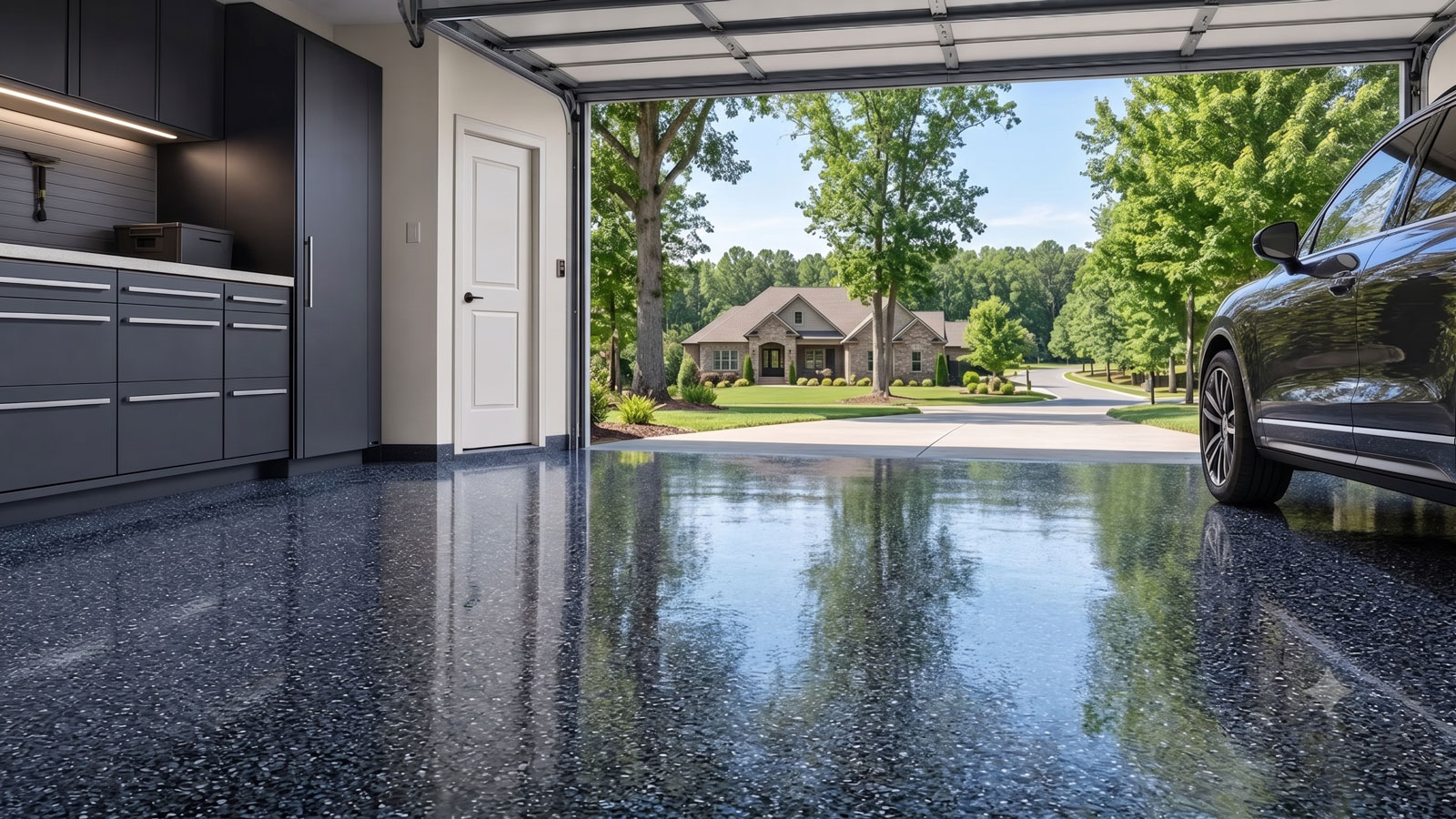
Garage Floor Coating in Green Bay, WI
Floor Coating Services in Green Bay, WI
Green Bay's housing market is unusually dominated by established buildings. A city housing study found 64 percent of homes constructed before 1980, including 17 percent by 1939, while only about 2 percent of single-family stock dated from 2010 onward at the time of its analysis. That does not mean every garage slab is old: later additions, repours, patches and coatings can change the floor considerably. A project assessment should examine actual concrete rather than estimate preparation from a house's age.
Green Bay winters create a separate, documented challenge. The Wisconsin State Climatology Office reports a 55.6-inch normal annual snowfall for 1991–2020, and WisDOT describes liquid brine, salt and cold-weather chloride additives used on roads. Cars can carry slush, grit and deicing residue into garages, making appropriate removal of old deposits and ongoing floor cleaning more relevant than a generic 'winter proof' claim.
Green Bay also has specific public flood-control work along the East River and Baird Creek, documented in a 2024 city report. That does not establish water entry or slab moisture at a private address. On sound, mechanically prepared concrete, epoxy, polyaspartic or decorative-flake coatings may ease maintenance but cannot redirect driveway runoff or stabilize moving cracks.
Local Market Insight
Green Bay combines established riverfront and downtown neighborhoods with newer residential growth. NOAA's Green Bay station documents northern winters, while WisDOT specifies salt, brine and colder-weather chloride additives. These conditions support attention to actual concrete, tracked winter residue and drainage rather than assumptions from a home's age.
What Affects the Cost of Garage Floor Coating in Green Bay?
Two Green Bay two-car garages may require very different preparation. An established residential floor could have paint, automotive deposits or past crack repairs, while a recently built slab might retain a curing product or sealer that affects adhesion.
Bid comparisons should separate those findings from garage area, storage clearance, finish layers and vehicle-return time. The Fox River's location and a public flood map cannot determine whether a private floor needs moisture mitigation.
- Older neighborhoods and later garage slabs: City planning identifies reinvestment priorities in downtown-fringe and older residential neighborhoods. A garage may have been rebuilt or its floor replaced independently of the home; inspect actual patching, soundness and previous treatments before quoting extra work.
- Paint, oil and past coatings: A floor used for years of vehicle parking or workshop projects can retain paint, oil or failing resin. Mechanical stripping and grinding should remove incompatible materials and establish an appropriate profile rather than simply conceal them.
- Road salt and winter grit: WisDOT uses salt and liquid brine for snow and ice control, with other chloride additives during low pavement temperatures. Existing residue, loose grit and damaged concrete should be evaluated during preparation; ordinary cleanup continues after coating.
- Riverside geography versus actual drainage: The Fox River and Green Bay waterfront are public landscape concerns, not tests of slab moisture. Check actual driveway pitch, gutter outlets and wetting at the overhead door; active runoff may require a separate correction.
- Cracks, edges and garage arrangement: Attached garages, older detached buildings, steps, drains and storage create different grinding and repair needs. Determine whether cracks are stable or moving before choosing a cosmetic treatment; a coating cannot correct serious structural movement.
- Texture, topcoat and cure schedule: Choose a finish that is practical for wet shoes and winter road residue without trapping grit. Compare actual color/flake samples, complete coating layers, permissible air and slab temperatures and when cars may return.
Call for a clear, project-specific estimate — or request one online.
Green Bay's Older Neighborhoods, Riverfront Growth and the Garage's Actual Age
A municipal Green Bay Housing Market Study documented that 64 percent of the housing stock predated 1980 and 17 percent dated to 1939 or earlier; it found only about 2 percent of single-family homes constructed since 2010 at the time of analysis. City planning also directs reinvestment toward downtown fringes, riverfront districts and established neighborhoods. The city's 2050 planning materials include an existing-conditions memo and a final draft. Separately, Green Bay's 2024 East River Flood Solutions report identified public sites for potential flood storage and ecological improvement along the East River and Baird Creek. Those documents are planning evidence; the presence of a draft should not be confused with proof that every proposed policy has been adopted. Together they describe a city with different periods of housing and infrastructure, not a survey of private garage slabs.
An established Green Bay house may have an attached garage constructed later or a detached floor poured during renovation. In a recently developed neighborhood, builder-applied curing compounds and sealers can still interfere with bonding. The correct preparation questions concern the actual pour, older paint, oil contamination, patches and visible distress. Moving belongings from edges makes repairs and floor transitions easier to assess.
Mechanical grinding is intended to expose suitable, sound concrete and the profile specified by the resin manufacturer. Old coatings that are peeling or poorly bonded must not simply be covered by a more expensive finish. Stable cracks may be addressed during normal preparation; continuing movement or major deterioration calls for another evaluation. House age is context, not a diagnosis.
Ask the installer to specify old-layer removal, grinding, cleaning, crack and joint treatment, edge detailing, full coating layers and allowed parking-return time. This is especially important where a garage doubles as storage or a winter entry: the total time without vehicle access can affect household logistics just as much as the decorative finish.
Green Bay Winters: Deicing Residue, Snowmelt and Real Water Pathways
The Wisconsin State Climatology Office reports a 55.6-inch annual snowfall normal in Green Bay for 1991–2020. That amount is more specific than calling the region merely 'snowy' and directly explains why garage floors repeatedly see tire-borne slush in winter. Wisconsin DOT reports that the state's county highway departments maintain state highways and employ anti-icing, deicing and pre-wetted salt. It explains that ordinary salt becomes less effective at pavement temperatures below roughly 15–20°F and that calcium chloride or magnesium chloride may be used in colder conditions. Those are precise maintenance practices, not a claim that a specific garage floor contains corrosive material.
Winter vehicles can deliver slush, brine, road grit and melting snow to a parking floor. A homeowner should distinguish that tracked material from rain or thaw runoff entering beneath a low overhead-door seal, and from suspected moisture originating within the slab. If damp patches persist when cars are absent and weather is dry, the chosen coating's moisture limitations should be checked. Neither NOAA snowfall data nor the city's riverfront maps can replace property inspection.
On sound prepared concrete, a continuous coating can make ordinary residue easier to sweep, rinse or wipe away than an unfinished porous surface. It does not eliminate salt buildup or the need to clean. It also cannot change driveway grading, prevent river flooding or stabilize a moving crack. Any recurring water entry from outside should be corrected or evaluated separately before a decorative system is installed.
Finish texture needs to balance traction when shoes are wet with the ability to clean winter grit. Discuss where the garage door admits sunlight, what temperature range the complete resin system requires and how long it must cure before vehicle parking. A promise based only on topcoat dry-to-touch time is not a substitute for a detailed installation schedule.
Frequently Asked Questions
Does Green Bay road salt mean my garage needs a special coating?
Road salt and brine are relevant because Wisconsin highway crews use them in winter. But an installer should first assess existing contamination, concrete condition and preparation requirements; a particular coating product is not automatically required simply because of the region's weather.
Does an old Green Bay house necessarily contain old garage concrete?
No. Garages are frequently added, altered or repoured after a house is built. Green Bay's established residential areas make the question relevant, but the actual slab's age, coatings, patches and soundness should drive the work.
Will epoxy stop snowmelt and rainwater from entering?
No. A finish cannot change driveway grade or prevent water crossing a low threshold. Winter meltwater carried in on vehicles is a separate normal cleaning issue, and unexplained slab moisture can require further evaluation.
Is epoxy or polyaspartic better when winters are cold?
Neither wins automatically. Preparation, the complete layer system, application and cure temperatures, desired texture, sunlight exposure and time to vehicle use determine an appropriate approach for the actual concrete.
What should a Green Bay coating estimate itemize?
Request old-paint removal and grinding, cleaning and contamination treatment, crack and joint repairs, any indicated moisture tests, the full coating and topcoat specification, texture and the manufacturer's parking-return requirements.
Green Bay Neighborhoods & Local Context
Phone Quote Line
Speak with a local floor coating specialist about your project and get a realistic estimate range.
(920) 990-2224Typical Project Cost
$3,000–$5,500
Typical range for a standard two-car garage. Final pricing depends on floor size, concrete condition, prep work, coating type, and finish options.
Helpful Guides
Other Service Areas